

Introduction: What Is a Floor Spring and How Does It Work?
How does a floor spring work? In simple terms, a floor spring is a concealed hydraulic door closer installed beneath the floor. It combines a mechanical spring with hydraulic oil to control the opening and closing motion of doors—especially heavy glass doors—ensuring smooth, safe, and controlled movement.
When a door is pushed open, internal components store energy. As the door closes, that stored energy is released gradually through a hydraulic system, preventing slamming and ensuring precise control. Unlike traditional overhead door closers, floor springs are completely hidden, offering a clean and modern architectural appearance widely used in commercial buildings, hotels, offices, and retail environments.
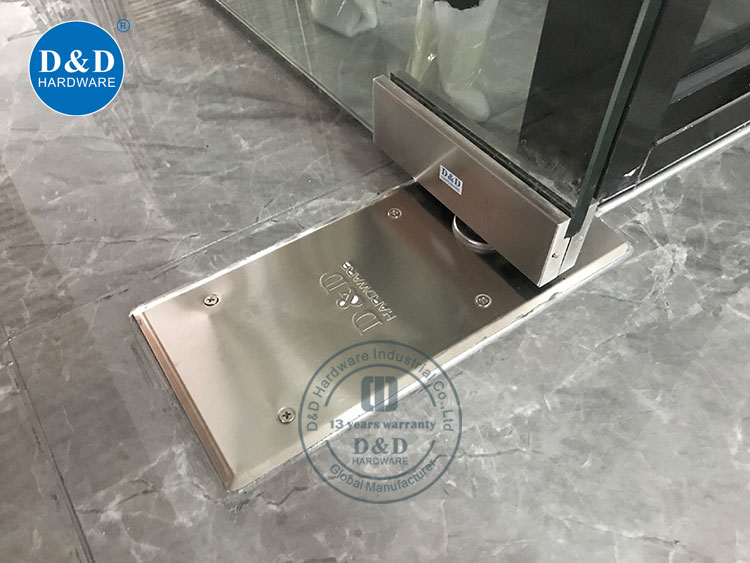
The Anatomy of a Floor Spring: Key Components Explained
To fully understand how a floor spring functions, it is important to look at its internal structure. A high-performance floor spring system typically consists of the following core components:
Cam Mechanism (Cam-Shaft System)
This is the heart of the floor spring. It converts the rotational motion of the door into controlled mechanical force. Compared to traditional rack-and-pinion systems, cam mechanisms provide smoother operation and higher efficiency, especially for heavy doors.
High-Strength Spring
The spring stores energy when the door is opened. The stronger the spring, the greater the load capacity. Heavy-duty floor springs are specifically designed to handle large and heavy glass doors without performance loss.
Hydraulic Oil & Piston System
This system controls the speed of the door. As the spring releases energy, hydraulic oil flows through internal channels, regulating motion and preventing sudden closing or slamming.
Adjustment Valves
Modern floor springs include adjustable valves that allow precise control of closing speed and latching speed. This ensures flexibility for different environments, from high-traffic commercial entrances to quieter office spaces.
Top Plate & Body Structure
The external cover plate is usually made from stainless steel for corrosion resistance, while the internal body is constructed from durable cast iron to withstand long-term heavy use.
Step-by-Step Working Principle of a Floor Spring
Understanding the working process step by step makes the mechanism much clearer:
Step 1: Door Opening (Energy Storage)
When a user pushes the door, the cam mechanism rotates and compresses the internal spring. At this point, energy is stored inside the system.
Step 2: Controlled Release (Hydraulic Regulation)
Once the door is released, the compressed spring begins to return to its original state. Instead of releasing energy instantly, the hydraulic system controls the speed by forcing oil through precision valves.
Step 3: Two-Stage Closing Mechanism
Most high-quality floor springs operate with a two-stage closing system:
♦ Main Closing Speed (90° to 15°): Smooth and controlled movement for general door closing
♦ Latching Speed (15° to 0°): Slight acceleration to ensure the door fully closes and latches securely
This dual control ensures both safety and functionality, especially in busy environments.
Why Floor Springs Are Ideal for Glass Door Applications
Floor springs are particularly popular for glass doors due to several unique advantages:
♦ Concealed Installation: Installed under the floor, maintaining a clean and minimalist design
♦ Double-Action Capability: Allows doors to swing in both directions, ideal for commercial entrances
♦ Heavy Load Capacity: Suitable for large and thick glass panels
♦ Enhanced Safety: Prevents slamming, reducing risk of injury and glass damage
♦ Durability in High Traffic Areas: Designed for frequent usage without performance degradation
These benefits make floor springs a preferred solution in modern architecture where both aesthetics and performance are critical.
Why Choose D&D Floor Springs? (Performance Meets Reliability)
Not all floor springs are built to the same standard. Choosing a high-quality solution directly impacts safety, durability, and long-term maintenance costs.
Heavy-Duty Performance
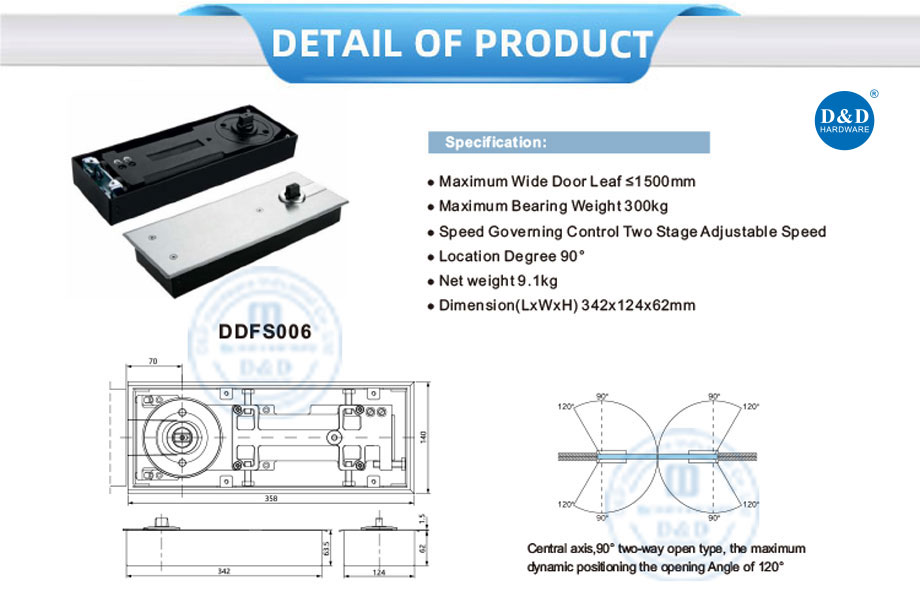
D&D floor springs are engineered to support heavy glass doors, with load capacities reaching up to 300kg. This makes them ideal for large commercial entrances and high-end architectural projects.
Premium Material Selection
♦ Stainless steel covers (SS304) for excellent corrosion resistance
♦ High-grade cast iron body for structural strength
These materials ensure long-lasting performance even in humid or coastal environments.
Precision Engineering
Advanced hydraulic systems and cam designs provide smoother operation, better control, and longer service life compared to standard models.
Certified Quality Assurance
Products are manufactured in compliance with international standards such as UL and ANSI Grade 1, ensuring reliability for demanding commercial applications.
Designed for High Traffic Environments
D&D floor springs are built to withstand continuous daily use, making them suitable for shopping malls, office buildings, airports, and hotels.
How to Choose the Right Floor Spring for Your Project
Selecting the correct floor spring depends on several key factors:
1. Door Weight and Width
Always match the floor spring capacity to the door size. Heavier and wider doors require higher torque models.
2. Application Type
♦ Single-action doors (one direction)
♦ Double-action doors (both directions)
Choose a model that supports your design requirements.
3. Installation Environment
For humid or outdoor environments, prioritize corrosion-resistant materials like stainless steel.
4. Traffic Frequency
High-traffic areas demand heavy-duty models with enhanced durability and performance stability.
5. Adjustment Requirements
Projects requiring precise control should use models with dual-speed or multi-stage adjustment features.
Installation and Maintenance Tips
Proper installation and maintenance are essential to maximize performance:
♦ Ensure correct alignment between the floor spring and door pivot
♦ Use proper sealing to prevent water ingress
♦ Adjust closing and latching speeds according to usage conditions
♦ Perform regular inspections for oil leakage or wear
♦ Avoid overloading beyond specified weight limits
A well-installed floor spring can last for many years with minimal maintenance.
Frequently Asked Questions (FAQ)
Q: Can floor springs be used for double-action doors?
Yes, most floor springs are designed to support both single and double-action doors, making them highly versatile.
Q: What is the typical lifespan of a floor spring?
High-quality floor springs can last hundreds of thousands of cycles when properly installed and maintained.
Q: Are floor springs suitable for outdoor use?
Yes, especially when using models with stainless steel covers and corrosion-resistant components.
Q: How do I adjust the closing speed?
Adjustment valves allow you to control both the main closing speed and the final latching speed using simple tools.
Conclusion: A Smart Choice for Modern Door Control
Floor springs are an essential component in modern architectural design, offering a perfect balance between functionality, durability, and aesthetics. Their concealed installation, smooth operation, and ability to handle heavy doors make them the ideal choice for glass door systems in commercial and high-end residential projects.
For businesses and contractors looking for reliable performance, selecting a high-quality floor spring is not just a technical decision—it is an investment in safety, user experience, and long-term value.
Ready to upgrade your door control system?
Explore the full range of high-performance floor springs from D&D Hardware and find the perfect solution for your next project. Our team is ready to provide expert guidance and tailored recommendations to meet your specific requirements.
Please feel free to contact us at any time!
David Jian:
Tel / WhatsApp / Wechat:+86-139 2903 7292