

Glass doors have become a defining feature of modern commercial and residential architecture, offering transparency, elegance, and a sense of openness. However, behind every smooth and controlled glass door movement lies a critical yet often overlooked component: the floor spring. A glass door floor spring is a concealed hydraulic device installed within the floor, designed to control the opening and closing motion of frameless or framed glass doors. It ensures safety, durability, and user convenience while maintaining a clean, minimal aesthetic.
Unlike traditional overhead door closers, floor springs are engineered to handle heavier loads, wider door panels, and high-traffic environments. From retail storefronts and office buildings to hotels and luxury residences, they are essential for both functionality and design consistency. This guide explores the types, features, and applications of glass door floor springs in depth, helping architects, contractors, and distributors make informed decisions.
What Is a Glass Door Floor Spring and How Does It Work?
A glass door floor spring is a mechanical-hydraulic device embedded in the floor beneath the door. It connects to the bottom pivot of the door and works in conjunction with a top pivot or patch fitting. The system controls door motion through hydraulic pressure, ensuring smooth opening and automatic closing.
At its core, the mechanism consists of a spring-loaded cam and hydraulic oil chambers. When the door is pushed open, the internal spring stores energy while hydraulic fluid regulates the speed. As the door is released, the stored energy returns the door to its closed position, while adjustable valves control closing speed and latching action.
The key advantages of this mechanism include:
• Concealed installation for a clean architectural finish
• Ability to support heavy glass doors (often up to 150kg or more)
• Adjustable closing speed and latching control
• Bidirectional opening (typically 90° or 135° each side)
• Long service life under high-frequency usage
Compared to overhead door closers, floor springs provide better load distribution and are ideal for frameless glass systems where aesthetics and structural performance must align.
Types of Glass Door Floor Springs
Glass door floor springs are available in various configurations depending on door size, weight, and functional requirements. Choosing the right type is critical for performance and longevity.
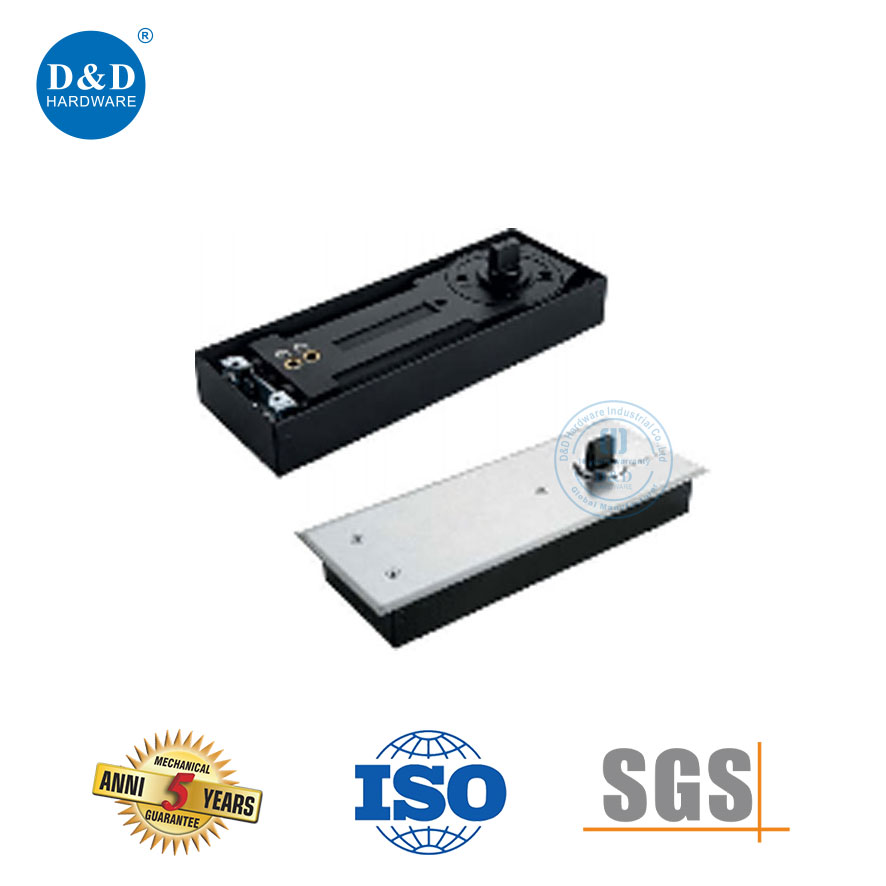
1. Standard Duty Floor Springs
Standard models are designed for medium-weight glass doors, typically used in offices, retail stores, and residential entrances. They provide reliable closing control and are suitable for moderate traffic environments.
These floor springs usually support door weights ranging from 80kg to 120kg and door widths up to around 1000mm. They offer basic adjustable closing and latching speeds, making them cost-effective and widely used.
2. Heavy Duty Floor Springs
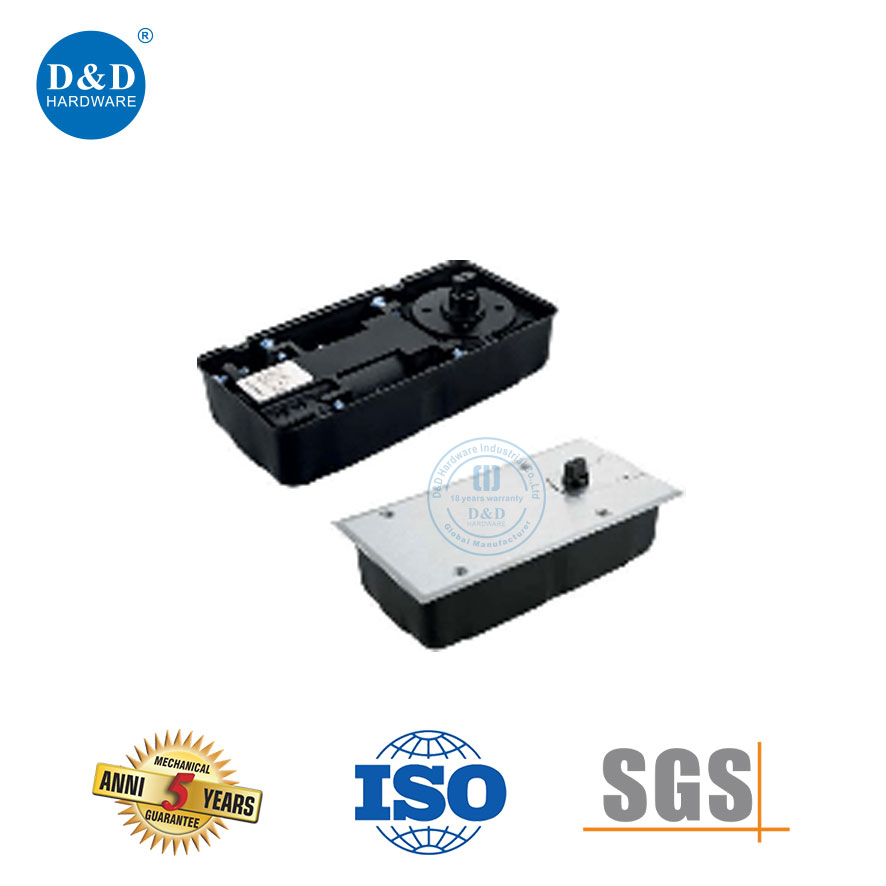
Heavy duty floor springs are engineered for large and thick glass doors, often found in commercial buildings, shopping malls, and hotels. These models can support door weights exceeding 150kg and wider door panels.
They feature reinforced internal components, stronger springs, and enhanced hydraulic systems to handle continuous high-frequency operation. Heavy duty floor springs also provide more precise adjustment controls, ensuring consistent performance even under demanding conditions.
3. Double Action Floor Springs
Double action floor springs allow doors to open in both directions (inward and outward), typically up to 90° or 135° on each side. This makes them ideal for entrances with high pedestrian flow, such as retail stores and office lobbies.
The bidirectional functionality improves accessibility and traffic flow, especially in spaces where directional control is less critical.
4. Hold-Open Floor Springs
Hold-open floor springs include a mechanism that keeps the door open at a specific angle, usually 90° or 105°. This feature is particularly useful in commercial environments where doors need to remain open during peak hours or for accessibility purposes.
However, in fire-rated applications, hold-open functions are typically restricted unless integrated with fire safety systems.
5. Non Hold-Open Floor Springs
These models automatically return the door to the closed position without any hold-open feature. They are commonly used in security-sensitive or climate-controlled environments where doors must remain closed at all times.
6. Concealed vs. Exposed Cover Plate Designs
Most floor springs are concealed within the floor, with only a stainless steel cover plate visible. The cover plate can be customized in finishes such as satin, mirror, or matte black to match architectural hardware.
High-quality cover plates are designed to withstand heavy foot traffic while maintaining a refined appearance.
Key Features to Consider
Selecting the right glass door floor spring requires careful evaluation of technical specifications and performance features. Below are the most important factors to consider:
Load Capacity
The floor spring must match the weight and dimensions of the glass door. Overloading can lead to premature failure, while under-specification may result in poor closing performance.
Adjustable Closing Speed
Most floor springs offer two-stage speed adjustment:
• Closing speed (from fully open to near closed)
• Latching speed (final closing action)
This ensures smooth operation and proper sealing.
Opening Angle
Depending on the design, floor springs allow different maximum opening angles, typically:
| Type | Opening Angle |
| Standard | ±90° |
| Extended Range | ±105° |
| Wide Angle | ±135° |
Wider angles improve accessibility and convenience in high-traffic areas.
Durability and Cycle Testing
High-quality floor springs are tested for durability, often exceeding 500,000 cycles. This ensures long-term reliability in commercial applications.
Material and Corrosion Resistance
Premium floor springs use stainless steel components and corrosion-resistant coatings. This is especially important for humid or coastal environments.
Installation Flexibility
Modern designs allow for easier installation and alignment, reducing labor time and improving accuracy. Some models offer interchangeable spindles or adjustable pivot positions.
Applications of Glass Door Floor Springs
Glass door floor springs are widely used across various industries due to their versatility and performance.
Commercial Buildings
In office towers and corporate spaces, floor springs provide smooth and quiet operation while maintaining a professional appearance. They are commonly used for main entrances, conference rooms, and internal glass partitions.
Retail Stores and Shopping Malls
Retail environments require durable and reliable door systems to handle constant foot traffic. Floor springs enable seamless entry and exit while supporting large glass storefronts.
Hotels and Hospitality
Luxury hotels prioritize both aesthetics and functionality. Floor springs allow for elegant glass entrances that operate smoothly and quietly, enhancing the guest experience.
Residential Projects
In modern homes, glass doors are used for patios, showers, and interior spaces. Floor springs offer a minimalist solution that complements contemporary design.
Public Facilities
Airports, hospitals, and transportation hubs rely on floor springs for their ability to manage high traffic volumes while ensuring safety and accessibility.
Installation and Maintenance Considerations
Proper installation is crucial for optimal performance. Floor springs must be accurately positioned within the floor to align with the door pivot system. Any misalignment can affect door movement and reduce the lifespan of the mechanism.
Installation typically involves:
• Cutting and preparing the floor cavity
• Securing the floor spring box
• Aligning the top and bottom pivots
• Adjusting closing and latching speeds
Maintenance is relatively straightforward but essential. Regular checks should include:
• Inspecting for oil leakage
• Ensuring smooth door operation
• Adjusting speed settings if needed
• Cleaning the cover plate
Periodic maintenance helps extend the service life and maintain consistent performance.
Advantages Over Other Door Control Systems
Compared to overhead door closers and hinge-based systems, floor springs offer several distinct advantages.
They provide superior load-bearing capacity, making them ideal for heavy glass doors. Their concealed installation enhances aesthetics, which is critical in modern architectural design. Additionally, floor springs distribute stress more evenly, reducing wear on door components.
While installation may be more complex, the long-term benefits in durability and appearance often outweigh the initial effort.
Frequently Asked Questions (FAQ)
Q1: What weight can a glass door floor spring support?
Most floor springs support between 80kg and 150kg, while heavy-duty models can exceed this range depending on design.
Q2: Can floor springs be used for frameless glass doors?
Yes, they are specifically designed for frameless glass systems and work with patch fittings and pivots.
Q3: How long does a floor spring last?
High-quality floor springs can last for several years, often tested for over 500,000 cycles.
Q4: Are floor springs suitable for exterior doors?
Yes, provided they have corrosion-resistant materials and proper sealing.
Q5: Can the closing speed be adjusted after installation?
Yes, most floor springs feature adjustable valves for precise control.
Conclusion
Glass door floor springs are a critical component in modern architectural hardware, combining performance, durability, and aesthetic appeal. Whether used in commercial buildings, retail environments, or residential spaces, they provide reliable door control while maintaining a clean and sophisticated look.
Understanding the different types, features, and applications allows buyers and specifiers to select the right solution for their projects. By choosing high-quality materials, ensuring proper installation, and performing regular maintenance, floor springs can deliver long-term value and consistent performance.
Please feel free to contact us at any time!
David Jian:
Tel / WhatsApp / Wechat:+86-139 2903 7292