

Glass doors have become an essential part of modern commercial and residential architecture. From office buildings and hotels to luxury homes and retail storefronts, glass doors create a clean and open appearance while maximizing natural light. However, behind every reliable glass door system is one critical hardware component that directly affects safety and long-term performance: the glass door hinge.
Many buyers focus mainly on door design or glass thickness while overlooking the importance of hinge material quality. In reality, the hinge is one of the most stressed components in the entire system. It supports the door weight, controls movement, maintains alignment, and ensures smooth daily operation. If the hinge material is poor, even a beautifully designed glass door can quickly develop operational problems.
Stainless steel glass door hinges are widely preferred because they combine strength, corrosion resistance, and modern aesthetics. But not all stainless steel hinges are manufactured to the same standard. The quality of the stainless steel material significantly affects durability, rust resistance, structural stability, and overall service life.
This article explains why material quality matters so much in stainless steel glass door hinges, how different stainless steel grades compare, and how choosing premium hardware can reduce long-term maintenance costs while improving building performance.

What Are Stainless Steel Glass Door Hinges?
Stainless steel glass door hinges are hardware fittings designed to connect and support glass doors while allowing controlled opening and closing movement. These hinges are commonly used for frameless glass doors, shower doors, office partitions, and commercial entrances.
Unlike standard wooden door hinges, glass door hinges must handle unique structural challenges. Tempered glass panels are heavy, fragile under uneven stress, and require precise support. Because of this, hinge quality directly influences both safety and user experience.
High-quality stainless steel hinges are designed to provide:
• Stable load-bearing performance
• Smooth and quiet operation
• Long-term corrosion resistance
• Secure glass clamping
• Modern architectural appearance
Today’s architectural projects often require hinges that not only perform well mechanically but also match premium interior and exterior designs. This is one reason stainless steel remains the preferred material in the glass hardware industry.
Why Material Quality Matters More Than Appearance
Many low-cost hinges look almost identical to premium products at first glance. They may feature similar polishing, similar shapes, and similar dimensions. However, the actual material quality inside the product often differs dramatically.
A hinge operates under constant mechanical pressure. Every opening and closing cycle places stress on the hinge body, pivot points, screws, and internal mechanisms. Poor-quality materials eventually fail under this continuous usage.
Inferior stainless steel commonly leads to problems such as:
| Common Issue | Result |
| Rust formation | Reduced lifespan and poor appearance |
| Weak structural strength | Door instability |
| Surface discoloration | Lower architectural value |
| Loose hinge movement | Unsafe door operation |
| Poor machining accuracy | Glass stress concentration |
| Fast wear and tear | Increased maintenance cost |
For commercial buildings with high daily traffic, these issues can appear much faster than expected. A hinge that initially seems economical may require replacement within a short period, creating additional labor and maintenance expenses.
High-quality stainless steel significantly improves long-term reliability and performance.
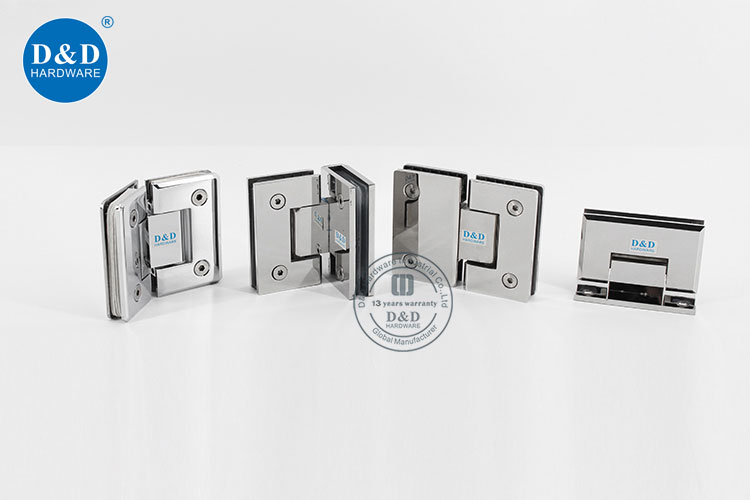
Stainless Steel Grades and Their Differences
One of the most important factors when evaluating glass door hinges is the stainless steel grade used during production.
The three most common materials are stainless steel 201, 304, and 316. Although they may appear visually similar, their corrosion resistance and durability vary greatly.
Stainless Steel 201
Stainless steel 201 is generally used in cost-sensitive projects. It provides acceptable strength and appearance for dry indoor environments but offers lower corrosion resistance compared to higher grades.
Advantages include:
• Lower production cost
• Suitable for indoor decorative applications
• Good for light-duty usage
However, 201 stainless steel is more likely to develop rust in humid conditions, especially in bathrooms or coastal environments.
Typical applications include:
• Interior office doors
• Decorative partitions
• Dry indoor installations
Stainless Steel 304
304 stainless steel is considered the standard premium material for most architectural glass door hardware.
It offers an excellent balance between:
• Corrosion resistance
• Structural strength
• Cost efficiency
• Long service life
304 stainless steel performs very well in hotels, commercial buildings, offices, and shower room applications. This material is widely used globally because it maintains both appearance and performance over time.
Stainless Steel 316
316 stainless steel provides even higher corrosion resistance because it contains molybdenum, which improves protection against saltwater and harsh environments.
This material is ideal for:
• Coastal projects
• Marine environments
• Luxury outdoor architecture
• High-humidity climates
Although more expensive, 316 stainless steel delivers superior durability in demanding conditions.
Stainless Steel Comparison
| Stainless Steel Grade | Corrosion Resistance | Typical Use Environment | Cost |
| SS201 | Moderate | Dry indoor use | Low |
| SS304 | High | Commercial and residential | Medium |
| SS316 | Very high | Coastal and marine projects | High |
How Premium Stainless Steel Improves Door Performance
The quality of stainless steel directly affects how a glass door performs throughout its service life.
Stronger Load Capacity
Glass doors are heavy. Large frameless tempered glass doors can place significant pressure on the hinge system every day.
Premium stainless steel hinges provide better:
• Structural integrity
• Weight support
• Long-term stability
• Resistance to deformation
Low-grade hinges may gradually bend or loosen, causing door sagging and alignment problems.
Better Corrosion Resistance
Corrosion is one of the biggest threats to door hardware performance. Once rust develops, the hinge structure weakens and operational smoothness decreases.
High-quality stainless steel helps prevent:
• Surface rust
• Internal corrosion
• Moisture damage
• Salt exposure deterioration
• Chemical cleaning damage
This is especially important in bathrooms, humid climates, and commercial cleaning environments.
Smoother Door Operation
Well-manufactured stainless steel hinges provide more stable movement because of accurate machining and tighter production tolerance.
This creates:
• Quiet opening and closing
• Reduced vibration
• Better door alignment
• Improved user experience
Cheap hinges often begin producing noise or unstable movement after extended usage.
Surface Finish Is Also Part of Quality
The surface finish of a glass door hinge affects more than appearance. It also influences corrosion resistance, scratch resistance, and cleaning convenience.
Professional manufacturers use advanced polishing and finishing techniques to ensure consistency and durability.
Common finishes include:
| Finish Type | Appearance | Application |
| Satin Finish | Soft matte texture | Commercial interiors |
| Mirror Polish | Reflective luxury finish | Hotels and premium spaces |
| Brushed Finish | Modern textured appearance | Offices and homes |
| Black Finish | Contemporary style | Minimalist architecture |
| PVD Coating | Decorative premium colors | Luxury projects |
High-quality surface treatment helps maintain the hinge appearance even after years of usage.
Low-quality finishing often leads to:
• Uneven polishing
• Fingerprint marks
• Faster discoloration
• Surface scratches
• Reduced corrosion protection
Precision Manufacturing Matters as Much as Material
Even the best stainless steel cannot compensate for poor manufacturing accuracy.
Glass door hinges require extremely precise machining because glass panels are sensitive to uneven pressure. Poorly manufactured hinges can create stress concentration that may damage the glass.
Accurate Glass Clamping
Premium hinges are designed with precise tolerance control to ensure even pressure distribution.
This improves:
• Installation safety
• Glass protection
• Door stability
• Long-term alignment
Reliable manufacturers typically use CNC machining technology to achieve consistent precision.
Internal Structure Quality
For hydraulic or self-closing glass door hinges, internal component quality is equally important.
Premium products often include:
• Durable spring systems
• High-strength pivot pins
• Wear-resistant bushings
• Stable closing mechanisms
Inferior hinges may fail internally even if the exterior initially appears acceptable.
Applications That Require High-Quality Stainless Steel Hinges
Some environments place particularly high demands on glass door hardware.
In these situations, premium stainless steel hinges are strongly recommended.
Hotels and Hospitality Buildings
Hotel doors experience constant daily usage and must maintain quiet, smooth operation while preserving luxury aesthetics.
High-quality hinges help reduce maintenance interruptions and improve guest experience.
Commercial Offices
Office entrances and meeting rooms may be opened hundreds of times every day. Durable stainless steel hinges help maintain operational reliability.
Shower Rooms
Bathrooms involve constant exposure to moisture and cleaning chemicals. 304 or 316 stainless steel is generally recommended for these applications.
Coastal Buildings
Salt air accelerates metal corrosion significantly. In coastal regions, 316 stainless steel provides the best long-term performance.
Retail Storefronts
Retail glass entrances require both durability and visual appeal. Premium hinges support heavy doors while maintaining smooth operation.
The Hidden Cost of Cheap Hinges
Many project buyers focus heavily on reducing initial hardware costs. However, cheap hinges often create larger long-term expenses.
Low-quality hinges commonly result in:
• Frequent replacement
• Door misalignment
• Rust complaints
• Increased maintenance labor
• Customer dissatisfaction
• Potential safety risks
In commercial projects, hardware failure can negatively affect business operations and overall building image.
A higher-quality hinge may cost more initially, but it usually provides:
• Longer service life
• Lower maintenance frequency
• Better appearance retention
• Reduced replacement costs
• Improved customer satisfaction
From a lifecycle cost perspective, premium stainless steel hinges are often the more economical solution.
How to Identify a High-Quality Glass Door Hinge
Because many hinges look visually similar, buyers should carefully evaluate product details before purchasing.
Several important factors can help identify a premium hinge.
Material Specification
Professional manufacturers clearly identify whether the product uses:
• Stainless steel 201
• Stainless steel 304
• Stainless steel 316
Reliable suppliers may also provide material testing reports.
Weight and Thickness
Higher-quality hinges generally feel heavier because they use thicker and stronger stainless steel material.
Very lightweight hinges often indicate reduced durability.
Surface Consistency
Inspect the hinge surface carefully. Premium products usually feature:
• Smooth edges
• Uniform polishing
• Consistent finish
• Clean machining details
Load Testing
Experienced manufacturers perform durability testing to ensure long-term reliability.
Testing may include:
• Opening cycle tests
• Salt spray tests
• Load-bearing verification
• Corrosion resistance evaluation
Future Trends in Stainless Steel Glass Door Hardware
Modern architectural trends continue driving demand for premium stainless steel glass door hinges.
Several important developments are shaping the market.
Minimalist Glass Design
Architects increasingly prefer frameless glass systems with slim-profile hardware and concealed fixing designs.
Higher Durability Expectations
Commercial projects now prioritize long-term reliability and lower maintenance requirements.
Decorative Surface Innovation
Advanced PVD finishes and anti-fingerprint coatings are becoming more popular in luxury architectural projects.
Sustainable Construction
High-quality stainless steel supports sustainable building goals because it offers long service life and recyclability.
Smart Building Integration
Modern door systems increasingly integrate with automatic closers, smart locks, and access control systems, requiring stronger and more reliable hinge structures.
Conclusion
Stainless steel glass door hinges are small components with a major impact on safety, durability, appearance, and operational performance. While many products may look similar externally, material quality creates enormous differences in long-term reliability.
Choosing high-quality stainless steel hinges helps improve:
• Corrosion resistance
• Structural stability
• Door alignment
• Operational smoothness
• Service life
• Maintenance efficiency
For most commercial and residential projects, stainless steel 304 offers an excellent balance between cost and performance. In coastal or high-humidity environments, stainless steel 316 provides even greater protection and durability.
Ultimately, investing in premium stainless steel glass door hinges is not simply about buying hardware. It is about ensuring safer operation, better aesthetics, lower maintenance costs, and long-term project value.
FAQ
Which stainless steel is best for glass door hinges?
304 stainless steel is the most commonly recommended option because it combines strong corrosion resistance, durability, and cost efficiency. For coastal projects, 316 stainless steel is usually preferred.
Are stainless steel glass door hinges suitable for bathrooms?
Yes. Stainless steel 304 and 316 hinges are widely used in shower rooms and bathrooms because they resist moisture and humidity effectively.
Why do cheap hinges rust quickly?
Low-quality hinges often use inferior stainless steel with lower corrosion resistance or poor surface finishing processes.
How long can premium stainless steel hinges last?
With proper installation and normal usage, high-quality stainless steel hinges can maintain reliable performance for many years.
Do thicker hinges perform better?
Generally, thicker hinges provide stronger load-bearing capacity and better structural stability, especially for heavy frameless glass doors.
Please feel free to contact us at any time!
David Jian:
Tel / WhatsApp / Wechat:+86-139 2903 7292