

Glass doors have become a popular choice for modern commercial buildings, offices, hotels, shopping malls, hospitals, and luxury residential projects. Their clean appearance, excellent visibility, and contemporary design make them ideal for creating elegant entrances while maintaining an open and spacious environment.
Behind every smooth-operating glass door is an important piece of hardware—the glass door floor spring. Although often hidden beneath the floor, this hydraulic device controls the door's movement, allowing it to open and close smoothly while protecting both the glass panel and surrounding hardware from excessive impact.
Choosing the correct floor spring is far more important than simply selecting a product that fits the door. A properly matched floor spring improves safety, extends the lifespan of the entire door system, reduces maintenance costs, and provides a better user experience. On the other hand, selecting an undersized or unsuitable floor spring may result in poor door control, oil leakage, difficult installation, premature wear, or even damage to the glass door.
Whether you are an architect, contractor, glass hardware distributor, project manager, or building owner, understanding the key factors involved in floor spring selection can help you avoid costly mistakes and ensure long-term performance.
This comprehensive guide explains everything you need to know before choosing a glass door floor spring for your next project.
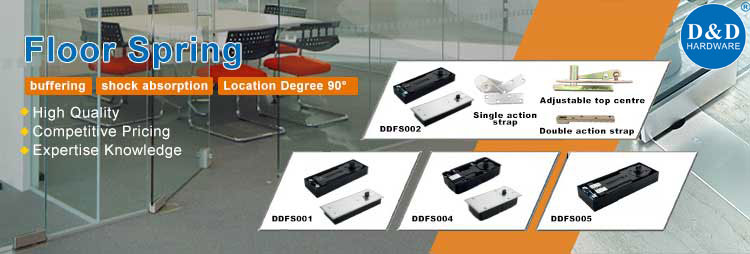
What Is a Glass Door Floor Spring?
A glass door floor spring is a concealed hydraulic door closer installed inside the floor beneath a glass door. It controls the opening and closing motion of the door while supporting part of the door's weight through its pivot mechanism.
Unlike traditional overhead door closers, floor springs remain hidden after installation, preserving the clean aesthetics of frameless glass doors. This makes them one of the most popular door control solutions for commercial architectural projects.
Most floor springs include several key components:
- Hydraulic damping mechanism for smooth door closing
- Adjustable closing and latching speeds
- Pivot spindle supporting the door
- Cement box for floor installation
- Cover plate with stainless steel finish
- Internal spring system for automatic door closing
Because the mechanism is concealed beneath the floor, floor springs provide a minimalist appearance without sacrificing functionality.
Why Choosing the Right Floor Spring Matters
Many buyers focus primarily on price when purchasing floor springs. However, the lowest-priced option may not deliver the performance required for demanding commercial environments.
A high-quality floor spring offers much more than automatic door closing. It ensures reliable operation over thousands of opening and closing cycles while protecting the glass door from unnecessary stress.
Choosing the correct floor spring provides several important benefits:
- Smooth and quiet door movement
- Improved safety for pedestrians
- Longer service life of the glass door system
- Reduced maintenance and replacement costs
- Better resistance to heavy daily traffic
- Consistent closing performance in different climates
- Enhanced appearance through concealed installation
For commercial buildings where doors operate hundreds or even thousands of times each day, selecting the proper floor spring is an investment in long-term reliability.
Where Are Glass Door Floor Springs Commonly Used?
Because of their durability and elegant appearance, floor springs are widely used in a variety of commercial and residential applications.
Typical installation environments include:
| Application | Why Floor Springs Are Preferred |
| Office Buildings | Modern appearance with smooth traffic flow |
| Shopping Malls | Handles frequent pedestrian traffic |
| Hotels | Quiet operation and premium aesthetics |
| Restaurants | Elegant frameless glass entrances |
| Hospitals | Controlled closing improves safety |
| Banks | Reliable performance for security entrances |
| Airports | Heavy-duty operation for continuous use |
| Retail Stores | Minimalist storefront design |
| Residential Villas | Luxury entrance solutions |
| Exhibition Centers | Supports large frameless glass doors |
As building designs increasingly favor frameless glass systems, floor springs have become one of the most widely specified architectural hardware products worldwide.
Why Floor Spring Quality Makes a Difference
Not all floor springs are manufactured to the same standard. While many products may look similar externally, significant differences exist in their internal construction, hydraulic performance, and overall durability.
High-quality floor springs are typically manufactured using precision-machined components, wear-resistant seals, corrosion-resistant materials, and stable hydraulic systems. These features help maintain consistent closing performance even after years of daily use.
In contrast, lower-quality products often experience issues such as:
- Hydraulic oil leakage
- Inconsistent closing speed
- Excessive door noise
- Reduced opening force over time
- Difficulty maintaining door alignment
- Premature component wear
- Frequent maintenance requirements
For projects with high pedestrian traffic or long service-life expectations, investing in a reliable floor spring can significantly reduce future maintenance costs while improving the overall user experience.
What Happens If You Choose the Wrong Floor Spring?
Selecting an unsuitable floor spring can lead to a range of operational and maintenance problems. In many cases, these issues only become apparent after installation, when replacing the unit becomes costly and time-consuming.
Common problems caused by choosing the wrong floor spring include:
- The door closes too quickly or too slowly.
- The floor spring cannot support the door's actual weight.
- Glass panels experience excessive stress during operation.
- The door fails to return completely to the closed position.
- Closing speed becomes inconsistent over time.
- Components wear prematurely under heavy traffic.
- Increased maintenance and replacement costs.
- Reduced safety for building occupants.
Taking the time to evaluate your project's specific requirements before purchasing will help ensure the floor spring delivers reliable performance throughout its service life.
8 Key Factors to Consider When Choosing a Glass Door Floor Spring
Selecting the right floor spring involves more than checking a product catalog. Every project has unique requirements based on door dimensions, traffic volume, environmental conditions, and architectural design. Evaluating these factors carefully will help ensure reliable performance and maximize the lifespan of your glass door system.
1. Door Weight
Door weight is the most critical factor when selecting a floor spring.
Every floor spring is designed to support a specific maximum door weight. Installing a floor spring with insufficient load capacity may result in poor closing performance, accelerated wear, hydraulic failure, or even damage to the glass door.
Before purchasing, determine the actual weight of the glass panel by considering:
- Glass thickness
- Door height and width
- Hardware weight
- Decorative metal frames (if applicable)
As a general guideline:
| Door Weight | Recommended Floor Spring |
| Up to 80 kg | Standard Duty |
| 80–120 kg | Heavy Duty |
| 120–150 kg | Extra Heavy Duty |
| Above 150 kg | High-Capacity Commercial Floor Spring |
When in doubt, choosing a slightly higher load capacity is usually preferable to undersizing the floor spring.
2. Door Size
Door dimensions directly affect the torque required for smooth operation.
Even if two doors weigh the same, a wider door creates greater leverage on the pivot system, increasing the load on the floor spring.
Consider:
- Door width
- Door height
- Glass thickness
- Center of gravity
- Single-door or double-door configuration
Large frameless entrance doors commonly require heavy-duty floor springs with reinforced internal mechanisms to maintain stable operation.
3. Opening Frequency
Traffic volume plays a major role in determining the durability requirements of a floor spring.
For example, a residential entrance may only be used dozens of times per day, while a shopping mall entrance can experience thousands of opening and closing cycles daily.
Typical usage scenarios include:
| Project Type | Daily Traffic | Recommended Solution |
| Residential Homes | Low | Standard Floor Spring |
| Office Buildings | Medium | Commercial Grade |
| Hotels | High | Heavy-Duty Hydraulic Floor Spring |
| Retail Stores | High | Commercial Heavy-Duty Model |
| Shopping Malls | Very High | Premium Heavy-Duty Floor Spring |
| Hospitals | Continuous | High-Durability Commercial Model |
| Airports | Extremely High | Industrial Heavy-Duty Floor Spring |
Projects with high pedestrian traffic should prioritize durability and long-term reliability over initial purchase cost.
4. Door Opening Direction
Not every glass door operates in the same way. The opening direction should match the floor spring's design and the intended traffic flow.
Common options include:
- Single-action doors
- Double-action (double swing) doors
- Left-hand opening
- Right-hand opening
- Center pivot doors
- Offset pivot doors
Double-action floor springs are especially popular for frameless commercial glass entrances because they allow the door to swing in both directions while automatically returning to the closed position.
5. Adjustable Closing Speed
Modern floor springs usually include adjustable hydraulic valves that allow installers to fine-tune the door's movement.
This adjustment improves user comfort while helping protect the glass from excessive impact.
Common adjustment functions include:
- Closing speed adjustment
- Latching speed adjustment
- Backcheck control (on selected models)
- Opening resistance adjustment
Proper adjustment ensures the door closes securely without slamming, even under varying environmental conditions.
6. Hold-Open Function
Some commercial buildings require doors to remain open during business hours to improve accessibility and customer flow.
In these situations, a floor spring with a hold-open function can be an ideal solution.
Typical applications include:
- Retail stores
- Hotels
- Shopping centers
- Exhibition halls
- Office lobbies
- Restaurants
However, hold-open functionality should generally not be used on fire-rated escape routes or emergency exits, where doors are required to close automatically to maintain safety.
Choosing the appropriate hold-open angle based on the building's operational needs can improve convenience without compromising performance.
7. Installation Environment
Environmental conditions have a significant impact on the long-term performance of a floor spring.
Consider the installation location before selecting a model.
Indoor Applications
Indoor environments generally place fewer demands on corrosion resistance, making standard stainless steel cover plates suitable for most office buildings, hotels, and residential projects.
Outdoor Applications
Outdoor entrances are exposed to rain, dust, humidity, and temperature changes. In these conditions, choosing a floor spring with enhanced corrosion resistance and durable sealing can help extend service life and reduce maintenance.
Coastal Areas
Buildings near the sea face higher levels of moisture and salt in the air. Stainless steel cover plates and corrosion-resistant internal components are recommended to minimize the effects of long-term exposure.
8. Compatibility with Glass Door Hardware
A floor spring should not be selected in isolation. It must work seamlessly with the rest of the glass door hardware system.
Before making a purchase, verify compatibility with components such as:
- Glass door patch fittings
- Top pivots
- Bottom pivots
- Glass door locks
- Pull handles
- Glass clamps
- Door stops
Using hardware from compatible specifications helps ensure proper alignment, easier installation, and smoother operation while reducing the risk of premature wear.
Comparison of Different Glass Door Floor Spring Types
The following comparison can help you identify the most suitable floor spring based on your project requirements.
| Feature | Standard Duty | Heavy Duty | Premium Commercial |
| Door Weight | Up to 80 kg | 80–150 kg | 150 kg+ |
| Traffic Volume | Low | Medium to High | Very High |
| Typical Applications | Residential | Offices, Hotels | Airports, Shopping Malls |
| Adjustable Speed | Yes | Yes | Yes |
| Hold Open Option | Optional | Optional | Optional |
| Durability | Good | Excellent | Maximum |
| Recommended Use | Light Commercial | Commercial Buildings | Large Public Facilities |
Recommended Floor Springs for Different Projects
Different building types have different performance expectations. Choosing a floor spring based on the application helps improve reliability and user satisfaction.
| Project | Recommended Floor Spring |
| Office Building | Heavy-Duty Hydraulic Floor Spring |
| Hotel Entrance | Heavy-Duty Floor Spring with Smooth Closing |
| Shopping Mall | High-Capacity Commercial Floor Spring |
| Hospital | Quiet Hydraulic Floor Spring |
| Luxury Residential Villa | Standard or Heavy-Duty Floor Spring |
| Retail Store | Hold-Open Floor Spring |
| Restaurant | Adjustable Closing Speed Floor Spring |
| Airport Terminal | Premium Heavy-Duty Floor Spring |
| Exhibition Center | Double-Action Floor Spring |
Selecting the appropriate model based on both traffic levels and door specifications ensures optimal performance and long-term reliability.
Installation Tips for Glass Door Floor Springs
Even the highest-quality floor spring cannot perform as expected if it is installed incorrectly. Proper installation is essential for achieving smooth door movement, extending the product's service life, and ensuring user safety.
Before installation, confirm that the selected floor spring matches the door's weight, dimensions, and opening direction. Carefully review the installation drawings and ensure all related hardware—including patch fittings, pivots, and glass door locks—is compatible.
During installation, pay close attention to the following:
- Ensure the cement box is installed level with the finished floor.
- Verify that the pivot center is accurately aligned with the top pivot.
- Use the correct spindle height for the glass door system.
- Check that the door opens and closes freely without friction.
- Tighten all hardware securely without over-tightening.
- Adjust the closing and latching speeds after installation is complete.
- Test the door multiple times to confirm smooth and consistent operation.
Proper alignment is particularly important. Even a slight deviation between the top pivot and floor spring spindle can affect the door's movement and lead to premature wear.
Maintenance Guide
Although floor springs are designed for long-term operation, regular maintenance helps preserve performance and reduce unexpected failures.
Routine inspections can identify minor issues before they become costly repairs.
A simple maintenance schedule includes:
| Maintenance Item | Recommended Frequency |
| Clean the stainless steel cover plate | Monthly |
| Inspect door alignment | Every 6 months |
| Check closing and latching speed | Every 6 months |
| Tighten visible fasteners | Every 6 months |
| Inspect pivots and patch fittings | Annually |
| Replace worn accessories if necessary | As required |
In addition to scheduled maintenance, building managers should periodically observe the door's operation. If the door begins closing unevenly, produces unusual noise, or fails to return to the closed position, the floor spring should be inspected promptly.
Avoid forcing the door beyond its designed opening angle or allowing heavy objects to strike the glass door, as excessive impact can shorten the lifespan of both the floor spring and the entire door system.
Common Mistakes When Buying a Glass Door Floor Spring
Many installation problems can be traced back to purchasing decisions rather than product quality. Understanding these common mistakes can help you select a more suitable solution.
Choosing Based Only on Price
A lower-priced floor spring may reduce the initial project cost, but it can lead to higher maintenance expenses, shorter service life, and more frequent replacements. Evaluating overall value is often more cost-effective than focusing solely on price.
Ignoring Door Weight and Size
Selecting a floor spring without accurately calculating the glass door's weight or dimensions can result in poor closing performance and unnecessary strain on the mechanism.
Overlooking Traffic Requirements
A floor spring designed for residential use may not withstand the demands of a busy commercial entrance. Always match the product to the expected frequency of use.
Forgetting Environmental Conditions
Outdoor entrances, humid climates, and coastal environments require products with stronger corrosion resistance and durable sealing. Choosing the appropriate materials helps extend service life.
Failing to Check Hardware Compatibility
A floor spring should integrate seamlessly with patch fittings, pivots, locks, and other glass door hardware. Incompatible components can complicate installation and affect long-term performance.
Frequently Asked Questions
What size floor spring do I need?
The correct size depends primarily on the door's weight, width, height, and frequency of use. Always refer to the manufacturer's load capacity recommendations and choose a model that matches your project's specifications.
How long does a glass door floor spring typically last?
The service life depends on product quality, installation accuracy, traffic volume, and maintenance. A well-manufactured floor spring that is correctly installed and regularly maintained can provide many years of reliable operation in commercial environments.
Can one floor spring fit all glass doors?
No. Floor springs are available in different load capacities, spindle configurations, opening angles, and functional options. Selecting the correct model for each application is essential for optimal performance.
Is a hold-open function necessary?
It depends on the intended application. Retail stores, hotels, and office lobbies often benefit from a hold-open feature to improve accessibility and customer flow. However, doors on fire escape routes or emergency exits should generally close automatically and should not use a hold-open function unless permitted by local building regulations.
How often should a floor spring be maintained?
For most commercial buildings, a professional inspection every six to twelve months is recommended. High-traffic facilities may require more frequent maintenance to ensure consistent performance.
Conclusion
A glass door floor spring is much more than a concealed door closer—it is a critical component that influences the safety, durability, and everyday performance of the entire glass door system.
Choosing the right floor spring requires careful consideration of door weight, dimensions, traffic volume, installation environment, hardware compatibility, and functional requirements. By selecting a product that is tailored to your project's needs, you can achieve smoother operation, lower maintenance costs, and a longer service life.
Whether you are specifying hardware for an office building, hotel, shopping mall, healthcare facility, or residential development, investing in a reliable floor spring helps ensure dependable performance and a better experience for building users for years to come.
Why Choose D&D Glass Door Floor Springs?
At D&D Hardware, we supply high-quality glass door floor springs designed for modern architectural applications. Our products are engineered for smooth hydraulic performance, long-lasting durability, and compatibility with a wide range of frameless glass door systems.
We offer:
- Heavy-duty floor springs for commercial projects
- Standard models for residential applications
- Multiple load capacities to suit different door sizes
- Adjustable closing and latching speeds
- Optional hold-open functionality
- Stainless steel cover plates with various finish options
- OEM and ODM manufacturing services
- Professional technical support for distributors and project contractors
Whether you are sourcing hardware for a single project or large-scale commercial developments, our team is ready to provide reliable solutions tailored to your requirements.
Request a Quote for Your Next Glass Door Project
Looking for a dependable glass door floor spring manufacturer or glass door hardware supplier?
Contact D&D Hardware today to receive product catalogs, technical specifications, competitive factory pricing, and expert assistance in selecting the right floor spring for your commercial or residential project.