

Glass clips play a critical role in modern architectural and interior glass installations. From frameless glass doors and shower enclosures to glass partitions and balustrades, these compact hardware components ensure that glass panels are held securely, aligned precisely, and presented cleanly without the need for bulky frames. As the demand for minimalist, transparent, and contemporary design continues to grow, glass clips have become an essential element in both commercial and residential projects.
Unlike traditional framing systems, glass clips provide discreet yet reliable fixing solutions. They allow designers and builders to maintain visual openness while still meeting structural and safety requirements. Understanding what glass clips are, how they function, and how to choose the right type for a specific application is essential for architects, contractors, and buyers involved in glass hardware selection.
What Are Glass Clips?
Glass clips are mechanical fixing components designed to hold glass panels in place without drilling holes through the glass. They typically clamp onto the edge or corner of a glass panel and secure it to a wall, floor, ceiling, or another glass panel. The clamping force is distributed evenly across the glass surface, reducing stress concentration and minimizing the risk of breakage.
Most glass clips consist of a main body, a clamping plate or cover, and internal rubber or plastic gaskets. These gaskets are critical because they protect the glass surface, absorb vibration, and provide friction to keep the glass firmly in position. Glass clips are widely used in frameless systems where aesthetics and simplicity are key priorities.
In practical applications, glass clips serve both a structural and decorative purpose. They stabilize glass panels under daily use while maintaining a clean, modern appearance that blends seamlessly into architectural designs.
Why Glass Clips Matter in Glass Installations
Glass is visually light but structurally demanding. Improper support can lead to misalignment, instability, or even safety hazards. Glass clips address these challenges by providing controlled, secure fixing points that maintain the integrity of the installation over time.
One of the main reasons glass clips matter is safety. Properly designed and installed clips ensure that glass panels remain firmly fixed, even in high-traffic environments such as offices, shopping malls, hotels, and public buildings. They help prevent glass movement caused by vibration, door operation, or environmental factors.
Glass clips also matter from a design perspective. Compared to bulky frames or channels, clips allow for a more open and transparent look. This makes them especially valuable in modern interiors, where visual continuity and natural light are prioritized. In addition, glass clips offer flexibility, making it easier to install, remove, or adjust glass panels when maintenance or layout changes are required.
Common Types of Glass Clips
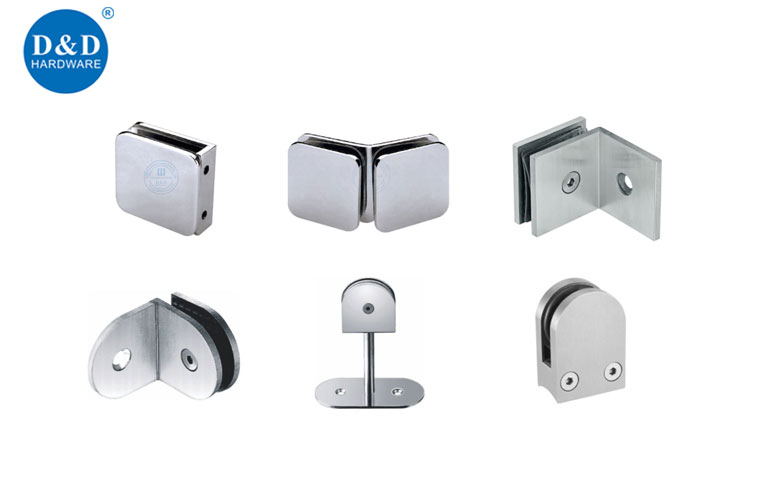
Glass clips are available in a variety of designs to suit different installation needs. While some projects require simple wall-mounted clips, others demand specialized configurations to handle corners, heavy loads, or specific angles.
Wall-to-glass clips are among the most commonly used types. These clips secure a glass panel directly to a wall or vertical surface and are widely applied in shower enclosures, glass partitions, and display cases. They provide strong lateral support while remaining visually subtle.
Glass-to-glass clips are designed to connect two glass panels together, often at a fixed angle such as 90 or 180 degrees. These clips are commonly used in glass partitions, office dividers, and display structures where walls are not available for mounting.
Floor-mounted and ceiling-mounted glass clips are used when glass panels need vertical support without side walls. These applications are typical in balustrades, glass screens, and freestanding partitions, where stability must be achieved from the base or top.
Some glass clips are adjustable, allowing fine-tuning during installation. Adjustable designs are particularly useful when dealing with uneven walls or floors, ensuring proper alignment and consistent spacing.
Materials Used in Glass Clips
Material selection is a critical factor in the performance and durability of glass clips. High-quality materials ensure long-term reliability, corrosion resistance, and a refined appearance.
Stainless steel is the most widely used material for premium glass clips. It offers excellent strength, resistance to corrosion, and suitability for both indoor and outdoor environments. Stainless steel glass clips are commonly used in bathrooms, coastal areas, and commercial buildings where durability is essential.
Aluminum glass clips are lightweight and cost-effective, making them suitable for interior applications where corrosion exposure is limited. They are often anodized or powder-coated to enhance surface protection and visual appeal.
Inside the clip, rubber or plastic gaskets play a vital role. These components prevent direct metal-to-glass contact, protect the glass surface from scratches, and help distribute clamping pressure evenly.
Surface Finishes and Visual Impact
While glass clips are small components, their finish can significantly influence the overall look of a glass installation. A well-chosen surface finish complements surrounding hardware and architectural elements, contributing to a cohesive design.
Popular finishes include brushed stainless steel, satin, mirror-polished, matte black, and customized colors. Brushed and satin finishes are often preferred in commercial spaces for their understated elegance and resistance to fingerprints. Polished finishes provide a more decorative appearance and are commonly used in luxury residential interiors.
In modern minimalist designs, matte black glass clips have gained popularity, especially in industrial-style interiors and contemporary offices. The finish choice should always align with the project’s design language and usage environment.
Applications of Glass Clips in Different Settings
Glass clips are used across a wide range of architectural and interior applications. In residential spaces, they are most commonly found in shower enclosures, glass doors, and room dividers. Their compact size and clean appearance make them ideal for bathrooms and living areas where space and aesthetics are equally important.
In commercial environments, glass clips are widely used in office partitions, meeting rooms, retail displays, and storefronts. They provide a professional, modern look while allowing flexible space planning. In public buildings, glass clips support glass balustrades, railings, and protective screens, contributing to both safety and architectural openness.
Hospitality projects such as hotels and restaurants also rely heavily on glass clips to achieve elegant, transparent layouts that enhance guest experience without compromising durability.
Key Factors to Consider When Choosing Glass Clips
Selecting the right glass clip requires careful evaluation of several technical and practical factors. One of the most important considerations is glass thickness. Glass clips are designed for specific thickness ranges, and using an incompatible clip can lead to poor clamping or glass damage.
Load-bearing capacity is another critical factor. The size and weight of the glass panel, as well as its intended use, determine how many clips are required and where they should be positioned. High-traffic or safety-critical installations demand clips with higher load ratings and robust construction.
Installation environment also matters. Clips used in wet areas, outdoor spaces, or coastal regions must offer adequate corrosion resistance. Choosing the right material and finish ensures long-term performance and reduces maintenance requirements.
Finally, design compatibility should not be overlooked. The shape, size, and finish of the glass clip should complement other hardware elements such as hinges, handles, and door fittings to create a unified appearance.
Installation Considerations and Best Practices
Proper installation is essential to ensure the performance and safety of glass clips. Even the highest-quality clip can fail if installed incorrectly. Accurate measurement, correct positioning, and appropriate tightening torque are all crucial factors.
Installers should ensure that gaskets are properly seated and that the glass panel is aligned before fully tightening the clip. Over-tightening should be avoided, as excessive pressure can cause stress on the glass. In professional projects, installation guidelines provided by the hardware manufacturer should always be followed.
Regular inspection after installation helps identify any loosening or alignment issues early, especially in high-use environments.
The Role of Glass Clips in Modern Design Trends
As architectural design continues to move toward openness and transparency, glass clips have become increasingly important. They support the growing preference for frameless systems that maximize light, improve visual flow, and create a sense of spaciousness.
Glass clips allow designers to balance aesthetics with functionality. Their discreet presence ensures that glass remains the focal point, while their structural performance supports safe and durable installations. This balance makes glass clips an indispensable component in contemporary building projects.
Conclusion
Glass clips may be small in size, but their impact on glass installations is significant. They provide essential support, enhance safety, and enable the clean, modern aesthetics that define today’s architectural and interior designs. By understanding their function, types, materials, and selection criteria, buyers and project planners can make informed decisions that improve both performance and visual appeal.
Choosing the right glass clips is not just about holding glass in place—it is about ensuring long-term reliability, design consistency, and user safety in every glass application.
Please feel free to contact us at any time!
David Jian:
Tel / WhatsApp / Wechat:+86-139 2903 7292