

This guide explores what glass patch fittings are, how they function, their key advantages, common types, material considerations, installation factors, and why they remain a stylish and secure solution for modern glass applications.

What Are Glass Patch Fittings and How Do They Work
Glass patch fittings are mechanical hardware components designed to clamp, support, and connect tempered or laminated glass panels without the need for traditional frames. Unlike framed systems, patch fittings grip the glass at specific points, typically at the top, bottom, or corners of the glass panel, distributing weight and operational forces evenly.
A typical glass patch fitting system consists of a metal housing, internal clamping plates, rubber gaskets, and fasteners. The glass panel is precisely cut and drilled or notched to match the fitting dimensions, allowing the fitting to “patch” onto the glass securely. When installed correctly, the fitting provides strong holding power while protecting the glass from direct metal contact, reducing stress and preventing damage.
Patch fittings are commonly used in swing glass doors, pivot doors, glass side panels, and glass walls, especially in high-traffic commercial environments where both appearance and performance are critical.
Why Glass Patch Fittings Are a Preferred Choice in Modern Design
One of the main reasons glass patch fittings are so widely adopted is their ability to combine aesthetics with functionality. Architects and designers favor them for projects that demand openness, light transmission, and a clean architectural line.
From a visual perspective, patch fittings allow large glass panels to appear almost floating, with minimal visible hardware. This creates a sense of transparency and sophistication that framed systems often cannot achieve. At the same time, modern patch fittings are engineered to handle significant loads, making them suitable for heavy glass doors and large panels.
In commercial applications such as office buildings, shopping malls, hotels, and airports, glass patch fittings also support compliance with safety and accessibility requirements. When paired with appropriate door closers, floor springs, and locking systems, they contribute to controlled movement, safe egress, and long-term reliability.
Common Types of Glass Patch Fittings
Glass patch fittings are available in several configurations, each designed for specific functions within a glass door or partition system. Rather than a single universal solution, most projects combine multiple types of patch fittings to achieve proper alignment and performance.
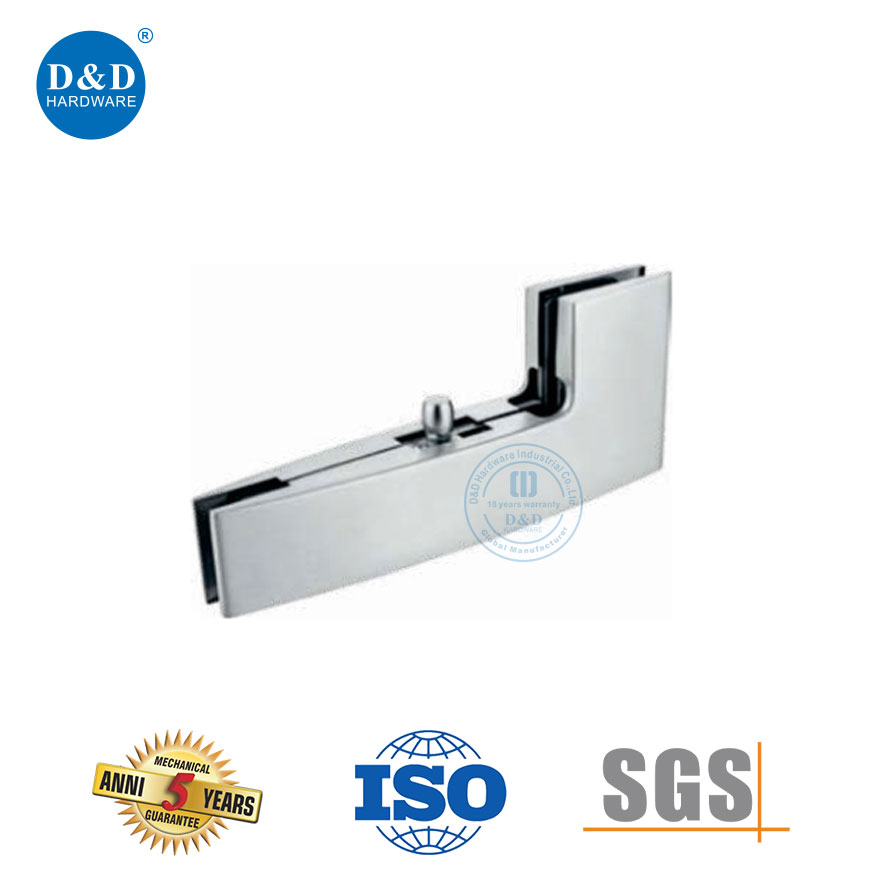
Bottom patch fittings are typically used in conjunction with floor springs or pivots. They carry most of the door’s weight and are critical for smooth operation and stability. These fittings must be precisely selected based on door size, glass thickness, and expected traffic levels.
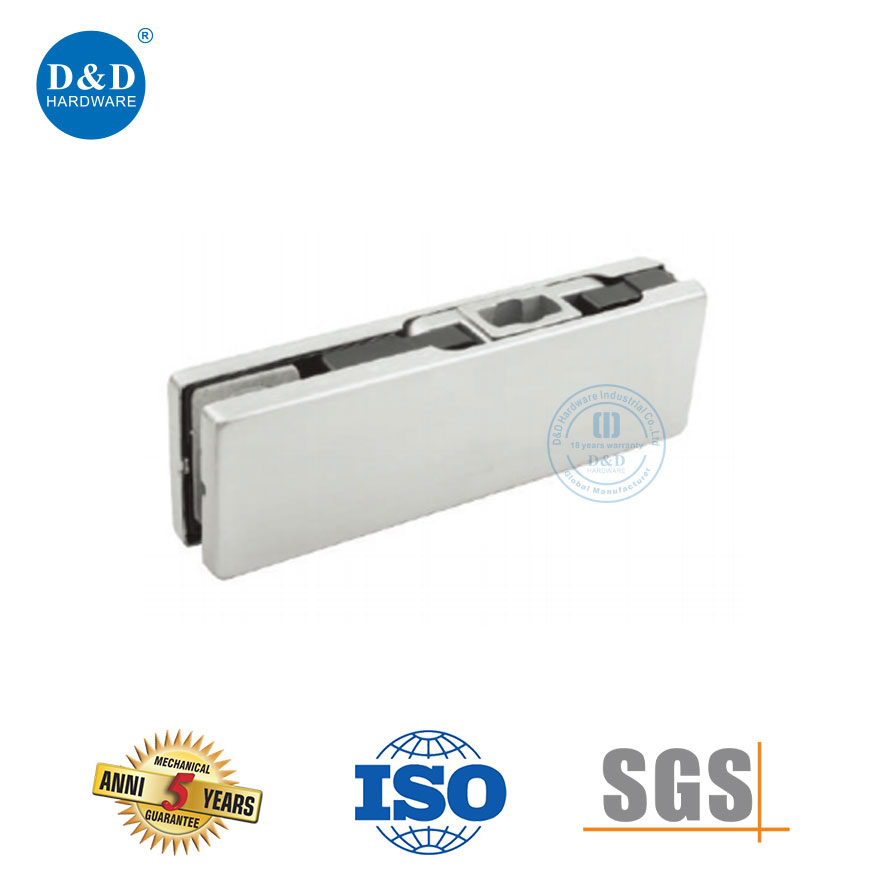
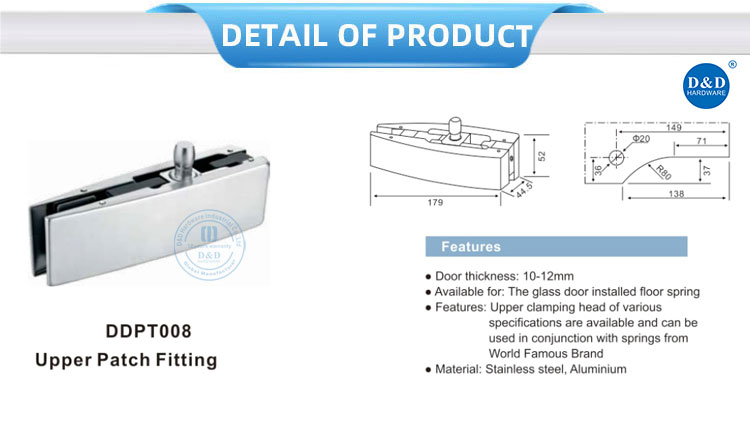
Top patch fittings are mounted at the upper edge of the glass door and often connect to overhead transoms or fixed glass panels. Their primary role is to guide movement and maintain alignment while complementing the bottom fitting.
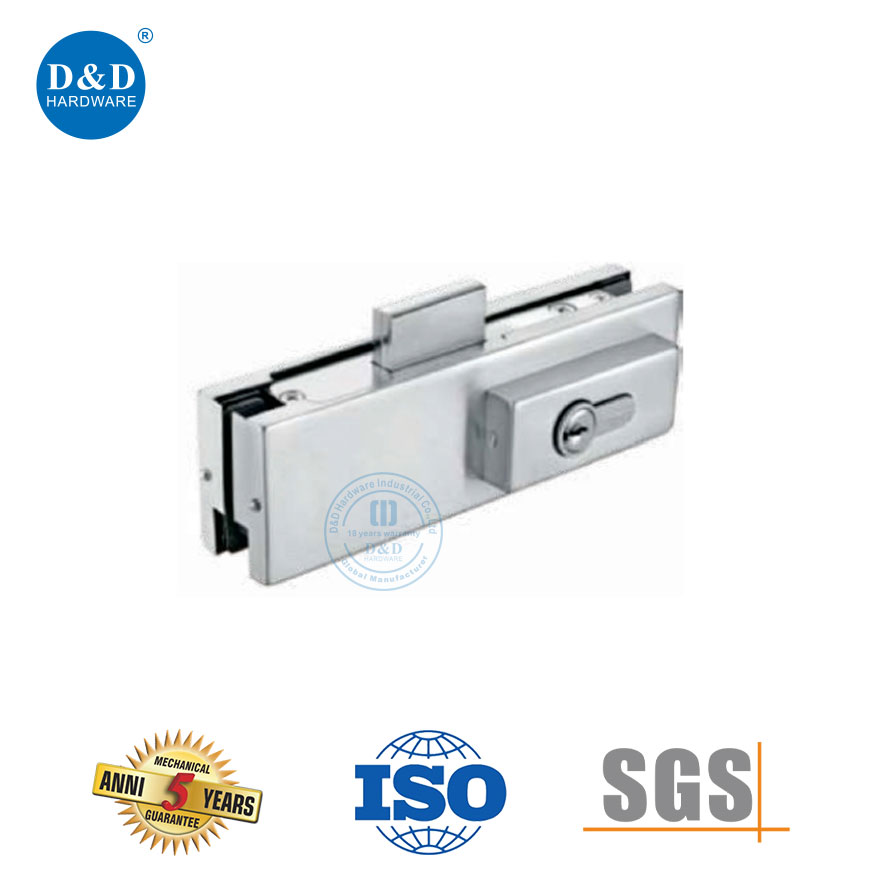
Lock patch fittings integrate locking mechanisms directly into the glass hardware, eliminating the need for separate door frames. These are commonly used in commercial glass doors where security and access control are required without compromising the frameless appearance.
Corner patch fittings and side patch fittings are frequently used in fixed glass panels or glass partitions, providing structural support and alignment between adjacent glass elements.
Materials and Finishes for Performance and Style
Material selection plays a crucial role in the durability and appearance of glass patch fittings. High-quality stainless steel is the most common choice due to its strength, corrosion resistance, and suitability for both indoor and outdoor environments. Different grades of stainless steel are used depending on project requirements, exposure conditions, and budget considerations.
Surface finishes also significantly impact the overall aesthetic. Polished finishes create a sleek, modern look often preferred in luxury retail or hospitality spaces, while satin or brushed finishes offer a more subtle, professional appearance that resists fingerprints and wear. Matte black and custom finishes have also gained popularity in contemporary interior design, especially for offices and high-end residential projects.
Beyond appearance, internal components such as gaskets and clamping plates are equally important. Quality rubber or plastic inserts help absorb vibration, protect the glass, and ensure consistent pressure distribution, which extends both glass and hardware lifespan.
Safety, Strength, and Load Considerations
Although glass patch fittings appear minimal, their engineering must meet strict safety and load-bearing requirements. Tempered or laminated safety glass is always recommended, as it provides higher strength and safer breakage characteristics compared to ordinary glass.
When selecting patch fittings, factors such as glass thickness, door width, height, and total weight must be carefully calculated. High-traffic commercial doors, in particular, require fittings designed to withstand frequent opening cycles and impact forces without loosening or deforming.
Proper installation is just as important as product quality. Misalignment, incorrect torque, or uneven pressure can lead to premature wear or glass damage. For this reason, experienced installers and accurate technical drawings are essential to achieving a safe and reliable glass door system.
Installation and Compatibility with Other Hardware
Glass patch fittings rarely function alone. They are typically part of a complete glass door hardware system that includes floor springs, door closers, pivots, handles, and access control components. Compatibility between these elements is critical to overall system performance.
During installation, precise glass preparation is required. Cutouts and holes must match the patch fitting specifications exactly, as even small deviations can affect strength and alignment. Installers must also ensure that all components are level and square, especially when working with double doors or large glass panels.
Another important consideration is maintenance. High-quality patch fittings are designed for long service life with minimal upkeep, but periodic inspection and tightening can help maintain optimal performance, especially in busy commercial environments.
Applications Across Commercial and Architectural Projects
Glass patch fittings are widely used across a range of industries and building types. In office spaces, they contribute to open-plan layouts and transparent meeting rooms. In retail environments, they support elegant storefronts that attract customers while maintaining security. Hotels and hospitality projects use patch fittings to create welcoming entrances and refined interior spaces.
Public buildings such as airports, hospitals, and educational facilities rely on robust patch fitting systems to manage heavy traffic while preserving a modern, professional appearance. Their versatility and adaptability make them suitable for both new construction and renovation projects.

Choosing the Right Glass Patch Fittings Supplier
Selecting the right supplier is just as important as choosing the right product. A reliable glass patch fitting manufacturer should offer consistent quality, precise machining, and a wide range of models to suit different project needs. Technical support, detailed drawings, and customization options can significantly simplify project execution, especially for complex or large-scale developments.
For international projects, stable supply capacity, export experience, and compliance with common industry standards are additional factors that buyers should consider. A dependable supplier helps ensure that glass door systems perform safely, look refined, and deliver long-term value.
Conclusion: A Smart Investment in Modern Glass Architecture
Glass patch fittings represent a smart and stylish solution for contemporary glass door and partition systems. By combining minimalist design with strong structural performance, they meet the demands of modern architecture without sacrificing safety or durability. Whether used in commercial offices, retail spaces, or public buildings, well-designed patch fittings enhance both the visual impact and functional reliability of glass installations.
With proper selection, professional installation, and quality manufacturing, glass patch fittings continue to be a trusted choice for architects, contractors, and building owners seeking secure, elegant, and future-ready glass solutions.
Please feel free to contact us at any time!
David Jian:
Tel / WhatsApp / Wechat:+86-139 2903 7292