

Glass doors are widely used in commercial buildings, offices, retail stores, hotels, and modern residential projects because of their clean appearance, transparency, and ability to maximize natural light. However, behind every safe and stable glass door installation lies a crucial yet often underestimated component: the glass door clamp. While hinges and locks usually receive more attention, glass door clamps play a direct and significant role in structural stability, load distribution, and long-term safety performance. Understanding how glass door clamps influence glass door safety is essential for architects, contractors, distributors, and project managers who aim to deliver secure and durable glass door systems.
In modern frameless glass door applications, clamps serve as the connection point between the glass panel and other hardware components such as hinges, patch fittings, floor springs, and door rails. Because glass is a brittle material that does not tolerate concentrated stress, proper clamp design and installation are fundamental to preventing breakage, misalignment, and safety hazards.
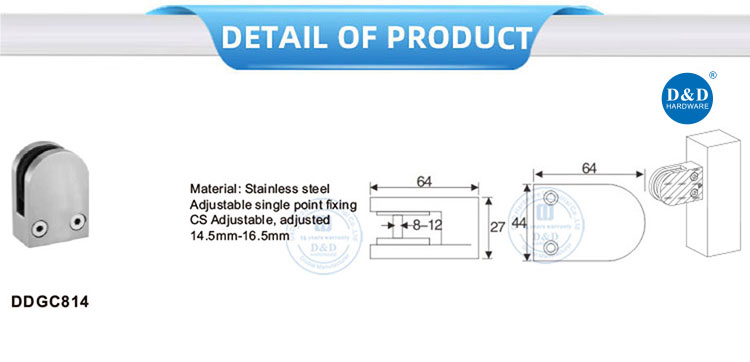
The Structural Role of Glass Door Clamps in Load Distribution
Glass panels, especially tempered or laminated glass used in commercial environments, can be heavy. A single frameless glass door may weigh anywhere from 30 kg to over 100 kg depending on thickness and size. The clamp functions as the mechanical interface that transfers the door’s weight and movement forces into the supporting hardware.
If a clamp is poorly designed or manufactured with low precision, it may create uneven pressure on the glass surface. Over time, this uneven pressure can lead to micro-cracks, edge chipping, or even sudden glass failure. High-quality glass door clamps are engineered to distribute stress evenly across a wider contact surface, minimizing point-load stress and reducing the risk of glass breakage.
The safety impact of proper load distribution includes:
• Reduced stress concentration at glass edges
• Prevention of glass slippage during repeated opening and closing
• Improved long-term structural integrity
• Lower risk of unexpected glass shattering
When clamps are manufactured with precision machining and correct internal padding (such as rubber or gasket liners), they protect the glass surface from direct metal-to-glass contact. This cushioning effect is critical for maintaining safety standards in high-traffic environments.
Material Quality and Its Impact on Safety Performance
Material selection directly affects the safety performance of glass door clamps. Since clamps bear weight and endure continuous motion stress, they must resist deformation, corrosion, and fatigue over time.
Stainless steel is widely recognized as one of the most reliable materials for glass door clamps in commercial projects. High-grade stainless steel provides:
• Excellent corrosion resistance, especially in humid or coastal environments
• High tensile strength to withstand repeated stress cycles
• Long-term dimensional stability
• Resistance to surface wear and mechanical fatigue
If inferior materials are used, clamps may gradually loosen or deform. Even slight deformation can change how force is distributed across the glass panel. In extreme cases, a weakened clamp may fail entirely, causing the door to detach or fall, which presents serious safety risks.
Surface finishing also contributes to safety. A properly finished clamp reduces sharp edges, ensures smooth interaction with other hardware components, and improves resistance to environmental damage. For commercial projects, durability is directly linked to safety compliance and liability prevention.
Precision Engineering and Installation Accuracy
Even the strongest material cannot compensate for poor engineering design. The internal geometry of a glass door clamp determines how securely it grips the glass panel. Precision-machined clamps ensure that:
• The clamping force is evenly distributed
• The tightening mechanism does not create stress points
• The glass panel remains vertically aligned
• Movement during operation remains stable and controlled
Improper clamp sizing is another common safety issue. If the clamp is not correctly matched to the glass thickness, installers may overtighten screws in an attempt to secure the panel. Overtightening increases internal stress within the glass, significantly raising the risk of spontaneous breakage.
Professional installation also plays a critical role in safety outcomes. Installers must verify correct torque levels, ensure gasket alignment, and confirm that the clamp sits flush without tilt or misalignment. A properly installed clamp not only enhances safety but also improves door longevity and operational smoothness.
Glass Door Clamps and Impact Resistance
Glass doors in commercial spaces are frequently exposed to impact forces. Customers may push doors aggressively, wind pressure may create sudden force changes, or accidental collisions may occur. Glass door clamps must absorb and transfer these dynamic forces without compromising structural integrity.
High-quality clamps help improve impact resistance in several ways:
• By maintaining firm grip during sudden force changes
• By preventing lateral glass movement
• By supporting controlled door motion through integration with floor springs and hinges
• By minimizing vibration that could weaken glass edges
In high-traffic commercial buildings, vibration fatigue is a long-term concern. Continuous small movements, if not properly stabilized, may lead to hardware loosening. Reliable clamps maintain secure positioning and prevent micro-movements that could otherwise accumulate into structural problems.
Safety Compliance and Industry Standards
In commercial construction projects, safety compliance is non-negotiable. Glass door hardware must meet recognized performance and durability standards to ensure building safety and regulatory approval. While clamps themselves may not always carry individual certification, their material quality, structural strength, and load-bearing performance directly influence whether the entire door assembly meets safety requirements.
Reliable manufacturers conduct internal load testing, cycle testing, and corrosion resistance testing to verify that clamps perform under real-world conditions. When selecting glass door clamps for projects such as office buildings, shopping malls, hospitals, and schools, it is essential to work with suppliers that prioritize:
• Strict production quality control
• Accurate dimensional tolerances
• Load-bearing verification
• Long-term durability testing
Safety is not determined by a single component but by the integration of all hardware elements. However, because clamps connect the glass directly to structural hardware, their performance has a multiplier effect on overall system safety.
Common Safety Risks Caused by Low-Quality Clamps
Understanding potential risks helps emphasize the importance of selecting high-quality glass door clamps. Low-grade clamps can create multiple safety issues, including:
• Glass slippage due to insufficient grip
• Uneven pressure leading to edge cracking
• Corrosion-induced weakening
• Loosening screws under vibration
• Sudden structural failure under heavy load
In commercial environments, any of these failures can result in injuries, property damage, or costly legal consequences. Therefore, clamp selection should never be based solely on price. Instead, project decision-makers should evaluate performance, manufacturing precision, and long-term reliability.
The Relationship Between Aesthetics and Safety
Modern architecture often prioritizes minimalist and frameless glass designs. Glass door clamps contribute not only to safety but also to visual appeal. However, aesthetic design should never compromise structural reliability.
Well-designed clamps achieve a balance between slim profile and strong load-bearing capacity. Engineering innovation allows manufacturers to create compact clamp designs while maintaining internal reinforcement and precise gripping mechanisms. The goal is to ensure that the door appears light and elegant while remaining structurally secure.
Invisible safety is often the hallmark of high-quality hardware. When clamps are correctly selected and installed, users rarely notice them—but they continuously provide structural support and safety assurance behind the scenes.
Long-Term Maintenance and Safety Stability
Safety is not only about initial installation; it also depends on long-term maintenance. Regular inspection of glass door clamps ensures ongoing safety performance. Maintenance teams should check:
• Tightening torque
• Surface corrosion
• Gasket condition
• Alignment stability
• Signs of stress around glass edges
Preventive maintenance helps detect early warning signs before they evolve into serious hazards. High-quality clamps require minimal maintenance but should still be inspected periodically in high-traffic environments.
Choosing the Right Glass Door Clamp Manufacturer
Selecting a professional and experienced glass door hardware manufacturer significantly influences safety outcomes. A reputable supplier focuses on:
• Precision CNC machining
• Strict material selection standards
• Comprehensive quality inspection processes
• Reliable packaging and transportation protection
• Technical support for installation guidance
When clamps are engineered with safety as a priority, the entire glass door system performs more reliably. For distributors and project contractors, choosing the right manufacturer reduces risk, improves customer satisfaction, and strengthens long-term business reputation.
Conclusion
Glass door clamps are far more than simple connectors; they are critical safety components that directly influence structural stability, load distribution, impact resistance, and long-term durability of glass door systems. From material strength to precision engineering and professional installation, every detail affects how safely a glass door performs in real-world conditions.
In commercial projects where safety standards are high and usage frequency is intense, investing in high-quality glass door clamps is not optional—it is essential. By prioritizing durability, precision, and reliable manufacturing, businesses can ensure that their glass door installations remain secure, stable, and safe for years to come.
Please feel free to contact us at any time!
David Jian:
Tel / WhatsApp / Wechat:+86-139 2903 7292