

Frameless glass doors have become a popular choice in modern commercial buildings, offices, shopping centers, hotels, and residential spaces. Their clean appearance, ability to allow natural light, and compatibility with contemporary architecture make them a preferred solution for architects and designers. However, the performance and safety of frameless glass doors depend heavily on the hardware components used to support and secure the glass panels. Among these components, glass door clamps play a crucial role.
Two of the most commonly used clamp types are top glass door clamps and bottom glass door clamps. Although they may appear similar at first glance, they perform very different functions in a glass door system. Understanding the differences between these two components is essential for installers, project contractors, architects, and hardware distributors who want to ensure proper door operation, long-term durability, and safety.
This article explains the key differences between top and bottom glass door clamps, including their structure, function, installation requirements, and application scenarios. By understanding these differences, you can choose the right hardware configuration for your glass door projects.
Understanding the Role of Glass Door Clamps
Glass door clamps are mechanical fittings used to hold and secure glass panels in frameless door systems. Unlike traditional framed doors, frameless glass doors rely on specialized hardware to support the weight of the glass while maintaining stability and alignment.
Glass clamps are typically manufactured from stainless steel to ensure durability, corrosion resistance, and a modern aesthetic that complements glass architecture. They grip the glass panel through precision engineering and internal gaskets that protect the glass surface.
In a typical frameless glass door system, clamps perform several important functions:
• Securing the glass door panel to pivot hardware or patch fittings
• Distributing the weight of the glass evenly
• Maintaining proper alignment during door operation
• Providing a stable connection between the glass and the floor spring system
Because glass panels are heavy and fragile compared with traditional door materials, the hardware must be designed to handle structural loads and repeated opening cycles.
Among all clamp components, the top and bottom glass door clamps are especially critical because they connect the glass door to the pivot mechanism that allows the door to rotate smoothly.
What Is a Top Glass Door Clamp?
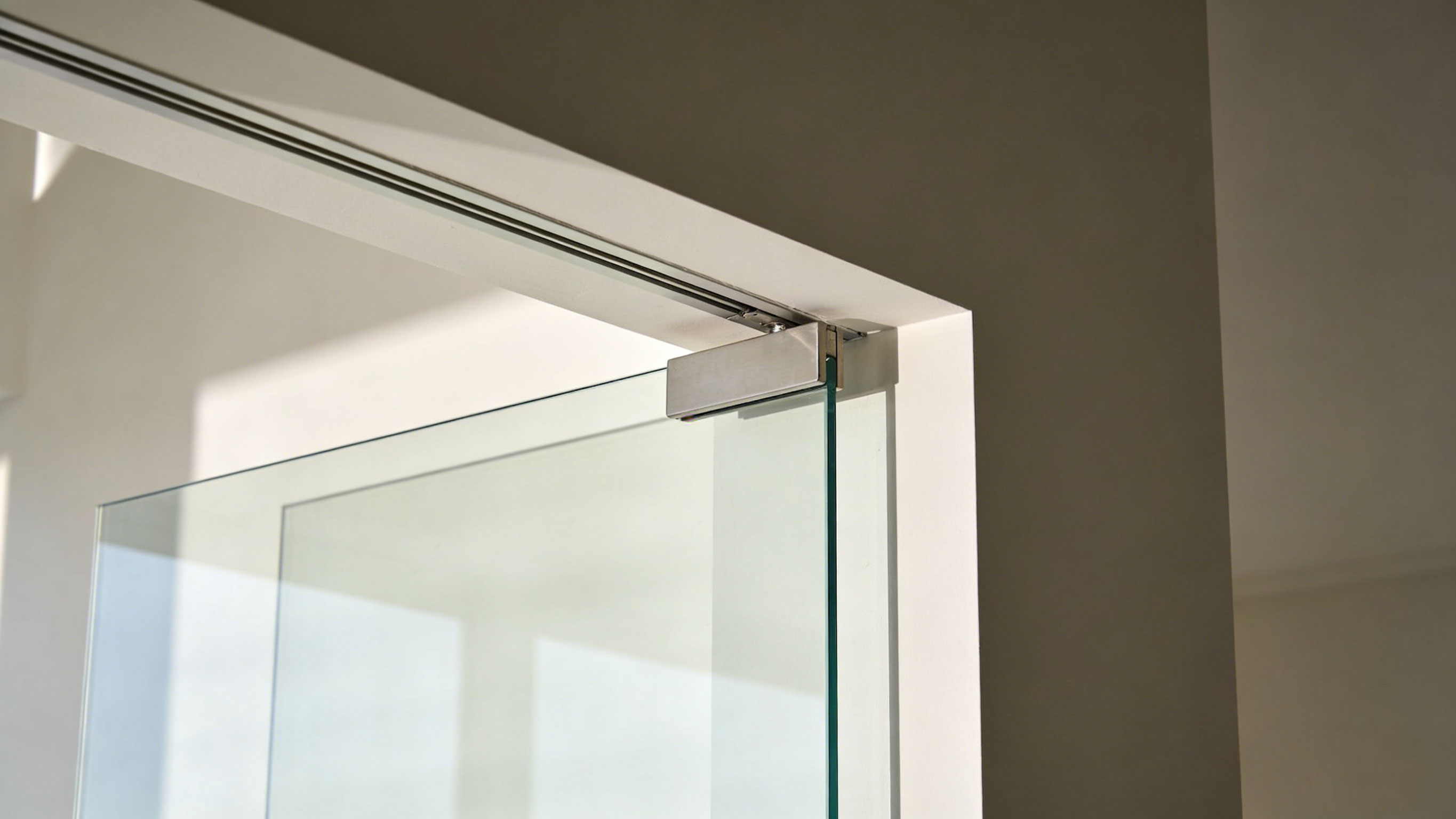
A top glass door clamp is installed at the upper edge of a frameless glass door panel. Its primary purpose is to connect the glass door to the upper pivot or overhead support system.
Unlike bottom clamps, top clamps usually do not bear the majority of the door's weight. Instead, they guide the door movement and keep the glass aligned with the pivot axis. This ensures the door opens and closes smoothly without excessive side movement.
Top glass door clamps typically include:
• Stainless steel clamp body
• Protective internal gaskets
• Pivot pin connection
• Adjustable fixing screws
In many commercial installations, the top clamp connects to a pivot bracket or transom fitting in the door frame.
Key functions of a top glass door clamp include:
• Stabilizing the upper section of the door
• Maintaining alignment between top and bottom pivots
• Supporting smooth door rotation
• Preventing lateral movement of the glass panel
Because the top clamp works together with the bottom pivot system, precise positioning is essential for balanced door operation.
What Is a Bottom Glass Door Clamp?
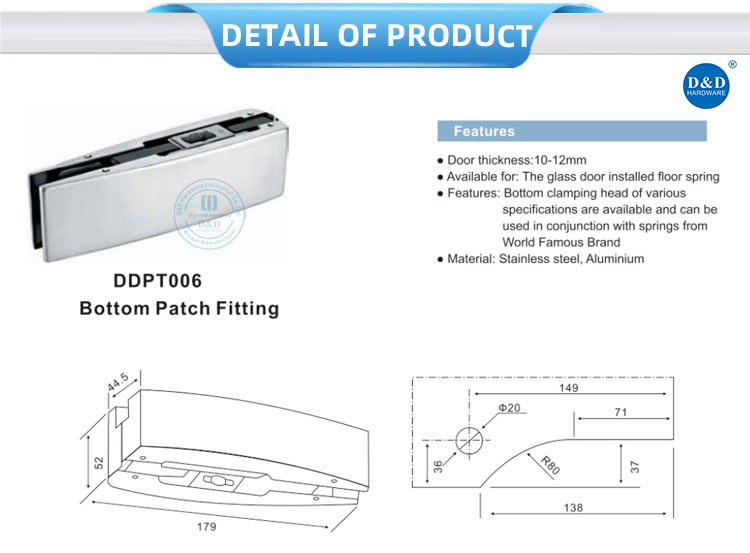
The bottom glass door clamp is installed at the lower edge of the glass door panel and is one of the most important structural components in the door system. Unlike the top clamp, the bottom clamp supports most of the door's weight.
In many frameless glass door installations, the bottom clamp connects directly to a floor spring system. The floor spring contains a hydraulic mechanism that controls door closing speed and positioning.
Because the bottom clamp must support the door weight and transfer movement to the floor spring, it is built with stronger structural capacity.
Typical features include:
• Reinforced stainless steel construction
• Secure clamping mechanism with protective gaskets
• Pivot spindle connection for floor spring systems
• Precision machining for stable rotation
The bottom clamp plays several important roles:
• Supporting the full weight of the glass door
• Connecting the door to the floor spring mechanism
• Enabling controlled door closing
• Maintaining stability during frequent use
Because of the heavy loads involved, bottom clamps must be manufactured with high precision and durable materials to ensure long-term performance.
Key Structural Differences Between Top and Bottom Clamps
Although both clamps secure glass panels, their structures differ due to their mechanical responsibilities.
The top glass door clamp is designed primarily for alignment and stabilization, while the bottom glass door clamp handles structural load and motion transfer.
Major differences include:
Load-Bearing Capacity
Top clamps carry minimal vertical load and mainly keep the door aligned. Bottom clamps support the full weight of the glass door.
Connection Mechanism
Top clamps connect to a pivot bracket or transom fitting, while bottom clamps connect to a floor spring spindle.
Reinforcement Design
Bottom clamps typically feature thicker bodies and stronger internal structures to support heavy glass panels.
Mechanical Function
Top clamps guide door movement, while bottom clamps transfer motion through the floor spring system.
These structural differences explain why the two clamp types cannot be used interchangeably.
Differences in Installation and Positioning
Installation methods also differ between top and bottom clamps.
Top clamp installation focuses mainly on alignment accuracy. Installers must ensure the pivot axis aligns perfectly with the bottom pivot to prevent uneven door movement.
The bottom clamp installation requires careful attention to structural support and floor spring alignment. The floor spring must be positioned correctly inside the floor cavity before attaching the clamp.
Improper bottom clamp installation can lead to issues such as:
• Door misalignment
• Increased friction during operation
• Faster hardware wear
• Reduced closing performance
Because the bottom clamp interacts directly with the hydraulic floor spring, the door weight must match the recommended hardware capacity.
Application Scenarios in Glass Door Systems
Top and bottom clamps are widely used in frameless glass door systems across many environments, including:
• Office buildings
• Shopping malls
• Hotels and restaurants
• Retail stores
• Residential interiors
A typical glass door system may include:
• Bottom glass door clamp connected to a floor spring
• Top glass door clamp connected to a pivot bracket
• Patch fittings for additional stability
• Pull handles or door locks
For high-traffic commercial areas, stainless steel clamps are recommended because they provide strong durability and corrosion resistance.
Conclusion
Top and bottom glass door clamps are essential components in frameless glass door systems. While they may look similar, they perform different mechanical roles. The top clamp stabilizes the door and ensures alignment with the pivot axis, while the bottom clamp supports the door’s weight and connects to the floor spring that controls movement.
Understanding these differences helps architects, installers, and contractors choose the correct hardware configuration for safe and reliable glass door installations. Proper clamp selection improves door stability, smooth operation, and long-term durability.
As frameless glass doors continue to grow in popularity in modern architecture, high-quality stainless steel clamps remain a key factor in achieving both aesthetic appeal and structural safety.
Please feel free to contact us at any time!
David Jian:
Tel / WhatsApp / Wechat:+86-139 2903 7292